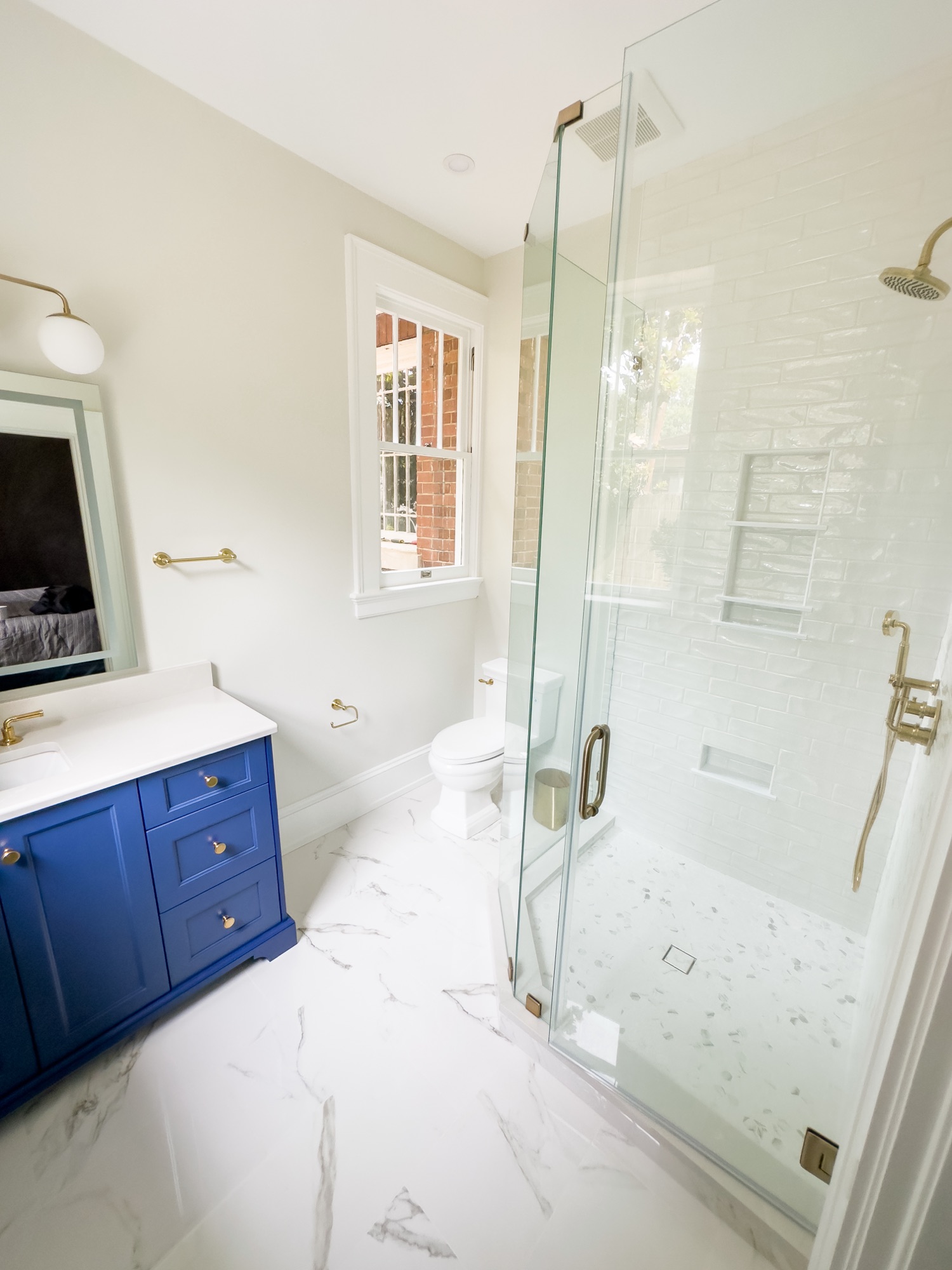
I’m not against DIY.
I started in the trades myself—hands-on, learning by doing. There’s nothing wrong with putting work into your own house.
But here’s the part no one tells you:
What you save on the front end, you can lose (and then some) when it’s time to sell.
Buyers Don’t See Effort — They See Risk
When a potential buyer walks through your home, they’re not thinking:
“Wow, they must have worked really hard on this.”
They’re thinking:
- Was this done right?
- Who did the work?
- Were permits pulled?
- Is this going to cost me money later?
DIY work introduces one big thing into the equation:
Uncertainty.
And uncertainty kills value.
The “Looks Good” Trap
Most DIY renovations focus on what you can see:
- Paint
- Tile
- Flooring
- Trim
And that’s exactly where the problem starts.
Because construction isn’t about what you see—it’s about what you don’t.
Behind that tile:
- Is there waterproofing?
- Was it installed to TCNA standards?
Under that floor:
- Is the subfloor flat within tolerance?
- Was proper prep done?
Inside those walls:
- Was the electrical done to National Electrical Code standards?
- Was plumbing inspected?
If the answer isn’t a confident yes backed by documentation…
Buyers assume the worst.
Permits Matter More Than You Think
A lot of homeowners skip permits because:
- “It’s faster”
- “It’s cheaper”
- “Nobody will know”
That works… right up until you try to sell.
Now you’ve got:
- Unpermitted work showing up in disclosures
- Appraisal issues
- Lender red flags
- Buyers asking for credits or walking away entirely
In some cases, you’ll be asked to:
- Open up walls
- Redo work
- Or discount the home
All because the work can’t be verified.
Inspectors Don’t Miss DIY
Home inspectors see this stuff every day.
They know what to look for:
- Improper wiring
- Missing GFCI protection
- Bad tile prep
- No slope in a shower pan
- Floating floors installed over uneven subfloor
Even if it “looks good,” it doesn’t pass scrutiny.
And once it’s in an inspection report…
It’s leverage for the buyer.
The Cost Comes Back — With Interest
Let’s say your DIY bathroom saved you $20,000.
Sounds like a win.
Until:
- The buyer asks for a $15,000 credit
- Or your home sits longer on the market
- Or worse—you lose a deal entirely
Now you’re not just giving back your savings…
You’re paying for the risk you introduced.
There’s a Difference Between DIY and Doing It Right
This isn’t about who does the work.
It’s about:
- Following building codes
- Using the right materials
- Installing to manufacturer specifications
- Having licensed trades where required
- Documenting the process
That’s what protects your house.
And more importantly…
That’s what protects your resale.
Final Thought
Your house is probably your biggest asset.
Treating a renovation like a weekend project might feel like you’re saving money…
But to a buyer, it often looks like a liability.
And liabilities don’t increase value.
They get discounted.











Leave a Reply